The Case for Heat Pump Hot Water
There is no mystery to the advantages of a heat pump hot water system in 2026: they put less strain on the electricity meter than an ordinary electric storage heater, are compatible with solar PV and will cut greenhouse gas emissions from the home. But they are not some kind of magic box. One has to be realistic; the outcome is a function of how much hot water the household calls for, the climate, the size of the system, the tariff and installation price, and even one’s tolerance for the odd bit of fan noise.
I am Tristan Farrow and I have little time for a glossy sales pitch, preferring to give a practical answer. In 2026 it makes sense for an Australian homeowner to put a heat pump under consideration, say to pair with rooftop solar or do away with an old electric model. Then again, you will find that installation requirements, cold-weather performance and rebates differ, so the lowest quote does not of itself make for the best deal.
The 2026 Bottom Line
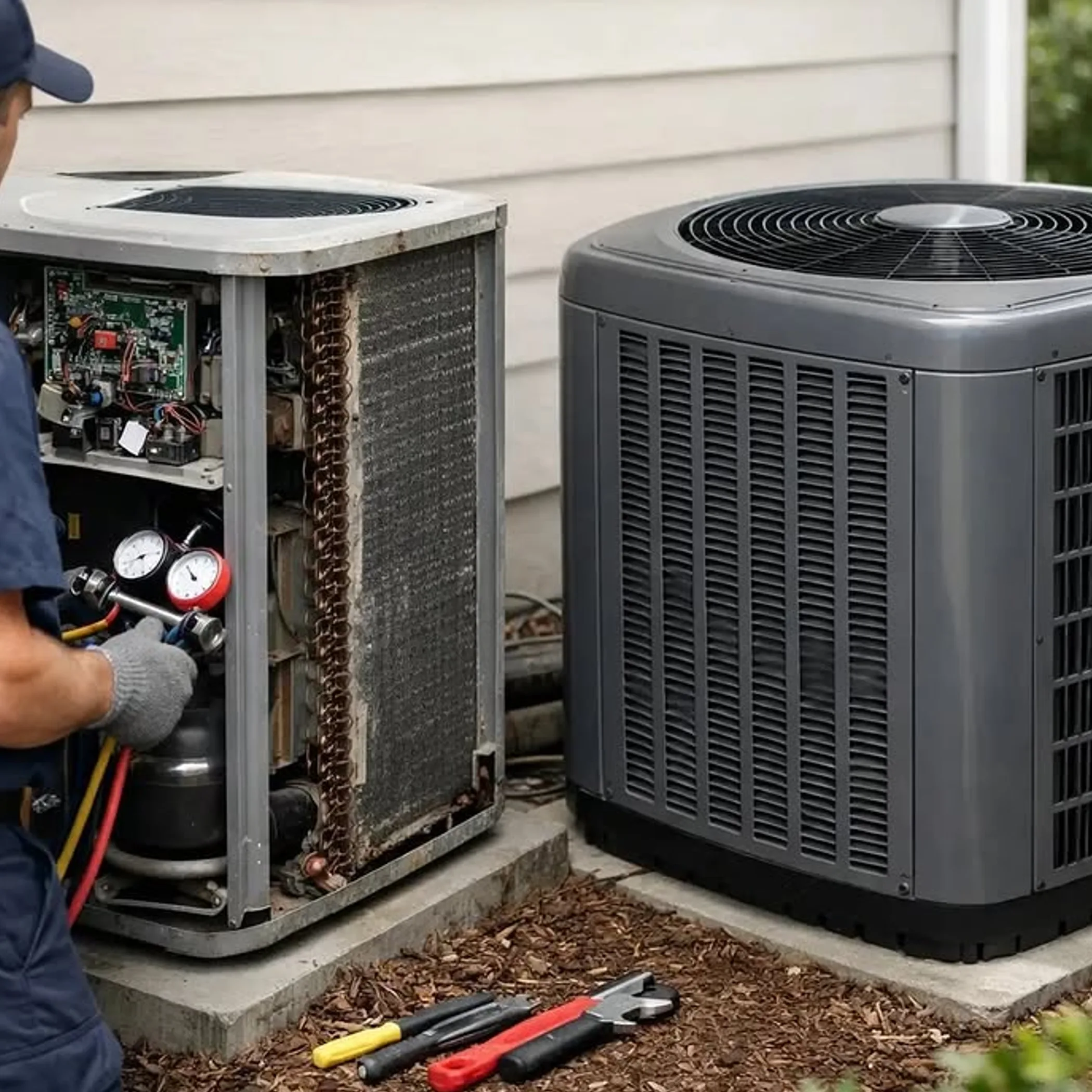
Put simply, the appeal of a heat pump water heater lies in its lower running costs and energy use, the fact it can work with your solar PV and leaves a smaller emissions footprint than the conventional electric alternative. If sized correctly it will see to your stored hot water needs without recourse to gas, something of consequence as families take stock of their long term bills and where they get their energy.
A heat pump is for the homeowner who can put the installation in order and has a proper place for the tank. It is not so appealing where outdoor space is at a premium or hot water demand is out of the ordinary, or if there is a pressing need for a like-for-like electric replacement. It is also worth understanding Melbourne hot water heater faults before deciding.
Who Should Consider One?
If you are the owner of your home and plan to be there to enjoy the savings on the energy bill, then a heat pump is worth looking at. When an electric system has run its course the question of a replacement is already posed, making it a good time to switch. A couple with unassuming usage will be fine with a small system; a family of five might find an undersized tank to be a recipe for a cold shower. Renters can put the reduced running costs to good use but will want to put it to the landlord first. And large families would do well to be mindful of reheating times and capacity.
How Heat Pumps Work
In a heat pump hot water system the ambient air is put to work warming the water in the storage tank. The outdoor unit takes in air and by way of a refrigeration cycle conveys the heat into the tank. Electricity is used to move the heat about, not to make it all from a resistive element.
You will hear the performance put in terms of a coefficient of performance (COP). A figure over one indicates the unit is giving more heat energy than it is taking in electrically, though in practice this is subject to the mode of operation, installation and the temperature of the air and water.
Tank, Compressor And Controls
For the hot water in reserve there is the storage tank. The heat pump side of things has a compressor, fan and heat exchanger, with an electric booster on hand if the temperatures are down or demand is up. With smart controls you can have the heating done in daylight to make use of solar PV.
Then there is boost mode for when the tank has to recover in a hurry or you have guests. Do not leave it on all the time though, as that is the quickest way to increase consumption and negate the efficiency you were after.
Benefits That Matter Most
What you get from a heat pump hot water system is of a financial and practical nature, not flashy. The value shows itself in due course in the form of system flexibility and less reliance on peak-rate power or gas. Some of these benefits are universal in Australia while others are very much dictated by your particular home and tariff. A heat pump that is ideal in one property could be an expensive nuisance in another.
Lower Energy Consumption
By virtue of transferring heat from the air a heat pump will generally be lighter on the electricity than a conventional setup. How much is saved comes down to the unit’s efficiency and whether the electric booster is in frequent use. It can mean a reduction in the bill, particularly if the water is being heated during a cheaper period or while the solar is generating. A household would be well advised to look at the system’s projected annual energy consumption as opposed to some sweeping percentage put forward in a brochure.
Solar PV Compatibility
There is a good fit between heat pumps and solar PV since hot water can serve as thermal storage. With a smart controller, the tank will be heated on any surplus solar electricity; this means less power is sent to the grid to be bought back from a retailer down the track.
For this to be of any real use the heating schedule has to accord with the way the household operates. Should the family be in the shower before dawn but the system is set to do its work at midday, there has to be sufficient capacity in the tank for that morning requirement. Leave it to an electrician or your solar installer to put the control settings in order instead of making a connection and leaving it at that.
Lowering Emissions
One can cut greenhouse gas emissions by doing away with an old gas or underperforming electric hot water system, provided the equipment is efficient and the electricity supply is right. Having some of the system’s power come from local solar PV will make the emissions tally even better.
The type of refrigerant is another consideration. R290 is found in some models and its global warming potential is not as high as you would find with older vintages. Make sure to review the manufacturer’s specs and put questions to the installer on how they handle recovery and disposal of the refrigerant.
Energy Bills And Where The Savings Are
Do not be guided by what is written on the box when it comes to running costs. The bill in the end is a function of the tariff, ambient conditions, tank size, the temperature of the water and demand from the home, to name a few.
Make a comparison of the published performance data for the new system against what you are using now for hot water. Put in a request for figures that pertain to your own household; a retired couple in the habit of travelling will have an entirely different profile to a family with two showers a day.
| Factor | What It Changes | What To Check |
|---|---|---|
| Household size | Daily hot water demand and tank recovery | Occupants, peak times for the shower and number of bathrooms |
| Climate | Cold-weather performance and output of the pump | Site of installation and winter temperatures in the area |
| Electricity tariff | Cost of heating at various hours | Time-of-use, controlled-load, off-peak and peak rates |
| Solar PV | Use of self-generated power | Daytime occupancy, inverter and panel output |
| System size | Reheating time and hot water on hand | What the manufacturer recommends for your needs |
While the Australian Energy Statistics program has the national numbers, they are no guide to an individual home’s bill. Online calculators can be a starting point but nothing is more dependable than an estimate drawn from your bills and the unit’s technical data.
Simple Payback Test
Take the present cost of hot water for the year and deduct the heat pump’s expected running cost to get an idea of payback. The additional outlay is then divided by the saving. Say installation is AUD 4,500 and a rebate of AUD 800 is on offer, with savings of AUD 450 a year, one is looking at roughly eight years (AUD 3,700 / AUD 450).
This is an example and no guarantee. Usage, component life, rebates and the price of electricity are all subject to change. Even if the payback is longer, it may be worth it for the sake of resilience and lower emissions and to forego gas charges, but the numbers ought to be clear before putting pen to paper.
Rebates, Costs And Payback
What you pay for a heat pump hot water system will cover the unit and tank, the plumbing and electrical, site prep, commissioning and the old heater’s removal. A simple swap is cheaper than having to relocate things or upgrade the switchboard.
By way of a planning guide most Australian households should put in for a number of quotes in writing and be prepared for wide variation in the installed price. For a replacement, a budget of between AUD 3,000 and 7,000 is reasonable though regional logistics or a premium system will add to that. Get the final figure in writing first.
Check On Rebates
The rules and value of a rebate for a heat pump can differ according to the state, the funding available and who is doing the installing. In Victoria the Victorian Energy Upgrades program might be of assistance but one must verify the details at point of purchase. Other states have their own government arrangements.
Under federal rules small-scale technology certificates could be in play for some systems but their worth is variable. Find out if the discount being offered already takes certificates into account and if you are ceding their value to the installer. An advertised rebate does not necessarily apply to every property or model.
The Australian Government has put out some official guidance on household hot water systems for the more efficient options; it is worth a read before one starts to look at quotes.
Installation Logistics
One would be well advised to have the route to the site clear of obstructions for the installer, who will want to come in by way of a laundry, garage or side gate. The plan of action is dictated by what can be done with the existing heater and its drainage and electrical supply as well as an outdoor spot that is stable. In Melbourne properties, heritage rules, apartment restrictions and a tight driveway can make for a more involved job.
When reviewing a quote, find out if such things as delivery, disposal of the old system, wall brackets, concrete pads, making good afterwards, condensate drainage and electrical protection are part of the package. “Standard installation” is open to interpretation from one business to the next and that is how one gets unanticipated charges on an invoice.
On the subject of environmental performance
Heat pumps are a means of cutting emissions since they are as a rule more economical with electricity than resistive electric heating. This is especially true if there is a lower-emissions grid or some solar PV to draw on. But they are not without impact. One has to consider the refrigerant used, the parts for replacement, transport and manufacture and when it comes time to dispose of it. A properly put in and looked after system of some durability is better for the environment than to be swapping out equipment every few years.
Electric or Gas
There is quick recovery to be had from a gas system, though one is at the mercy of connection costs and combustion and the supply. A heat pump does away with gas water heating but it is still an electricity user and may call on a booster when required.
What is best is a matter of the energy plan and the property. Those with dependable solar might incline to a heat pump. Where demand is atypical or there is not much room outdoors, a closer comparison with other electric or gas alternatives is called for.
Some drawbacks to take into account
The disadvantages of a heat pump are nothing one cannot live with, provided they are not overlooked to the point of being cross at bath time. It is a unit that requires space and the fan and compressor make their presence known; after a hard use it will not recover as fast as a gas system.
In cooler conditions in Australia the heat pump will run but efficiency and output can be altered. With the tank set high or a lot of demand in the morning hours the electric booster will see more use.
Noise and where to put it
If possible, keep the outdoor unit at a distance from any quiet entertaining area, neighbours or bedroom windows. Some flat and steady base will go some way to dampen vibration. For a townhouse or apartment, one should check body corporate and any acoustic stipulations.
A cupboard that looks the part but is short of ventilation is no good; the appliance will have to work for it. Heat pumps require air movement so do not tuck the fan in behind garden equipment and expect it to be efficient. Nor put it in a spot for dust and leaves to congregate.
Reality check
It is easy to think the system will run off solar and there will be no hot water bill. In fact it is an electricity consumer and the savings are down to usage, tariffs and the weather. Or that the bigger the tank the better. An oversized cylinder is an expense and will waste energy on hot water that is not going to be used. Sizing it right is of more value than buying the largest one that will fit through the gate.
Suitability for Melbourne and beyond
From Victoria and New South Wales to warmer regional areas, a heat pump will serve well enough. But the winter mornings in Melbourne can have an effect on reheating and efficiency; the installer needs to factor in frost, airflow and where the tank is sited. In Brisbane a given model may be fine but do not assume it is the answer for a home in Melbourne.
Seasonal considerations
By winter one will see more booster use and a slower recovery. Make sure the timers and filters are in order and have a look at the area around the unit. In summer, make use of solar PV scheduling and do not put in boost cycles for no reason.
Should a replacement be needed in a hurry, do not put it off till the tank is running all over the laundry. Put in the time to compare beforehand, particularly if the household is not equipped to go a day without hot water. When it is an emergency there is little room to haggle over price and the field of choice is limited.
Selecting the Right System
What makes for the best heat pump hot water system in 2026 is one that is a good fit for your climate, budget and installation site as well as the noise you will put up with and what your household requires. Do not be swayed by a brand name alone. You want to see open performance figures, a warranty to back it up, service support in the area and an installer at hand to put the settings in plain English.
Heat pump hot water system reviews are worth a close read; they can put noise or customer service issues in perspective. But then again they do not always compare like with like. A report of slow recovery might have more to do with an undersized tank or the way the unit is used than any defect in the product.
A Buyer’s Checklist
- Make sure the tank capacity is right for your hot water needs.
- Put published energy use and modes of operation side by side.
- Inquire as to the COP you can expect given local temperatures.
- See what the noise ratings are and the clearance the unit calls for.
- Find out if R290 refrigerant is in play and how servicing is done.
- Have a quote in writing for the rebates, removal and all the plumbing and electrical.
- Warranty terms should be examined along with the availability of parts and how quickly service can be had.
Put some questions to the installer
You might want to know where the condensate is going to drain, how the unit is to be sited, when it will be putting out hot water and what transpires if the tank has been run dry after a few showers. Check on the switchboard, isolation equipment and wiring to make sure they are up to standard. An installer of repute will have no problem with such questions, as opposed to making it feel like an airport security check.
Common Faults and Maintenance
For the most part maintenance of a heat pump is simple but the system does require some attention. Adhere to the manufacturer’s schedule, have a look for odd vibrations or noise and leave the outdoor unit unobstructed. Leave any work on the panels or refrigerant to someone with the qualifications to do it.
You may come across blocked airflow, sensor or electrical faults, a loss of hot water, drainage issues with the condensate or the booster coming on when you least expect it. Should the unit keep going into boost mode it is not down to bad luck, there is likely a fault or high demand at work. In Melbourne, where one researches hot water heater faults, it is as well to tell apart a true failure of the heat pump from a matter of household demand. Note the error codes, timing, temperature and any recent alterations before you get in touch with the installer; it will save time on diagnosis and spare you from having to replace parts needlessly.
If The Need Arises
An appliance that is leaking, gives off a burning odour, has tripped the circuit breaker or has taken to a grinding noise is cause to ring a technician. The same goes for when it ceases to provide hot water. For safety’s sake, shut it down as the manufacturer would have it and put some distance between children and anything damaged.
Retain the model number, service history and the rest of the installation papers. Should you ever put the house on the market it is a courtesy to the new owner to pass them on, and far more so than leaving a remote with a single “boost” button and no explanation.
Some Heat Pump Questions Put to Rest
Are they worth the trouble in 2026?
Provided the property has the room for it and the system is of the right size, the energy savings can make it worthwhile, especially to do away with gas or an old electric model or in conjunction with solar PV. One should judge by the quotes and rebates on offer and what the home demands, not some blanket promise of a payback period.
Any drawbacks?
The cost to put one in is higher and there are matters of fan noise, the space needed outdoors and how it performs in the cold. Reheating can take longer. Then there is the question of controls being poorly thought out which will eat into your savings. None of this precludes a heat pump but it is something to be put right first.
So which is the best water heater?
There is not one system to suit all Australian homes. A large regional home with its morning demands is not the same as a townhouse in Melbourne. Look at the total installed cost, the refrigerant, the efficiency data, the noise and the support on offer.
Is getting one advisable?
If your present gas or electric system is past its best or you are looking to cut long term energy use and have solar PV, then yes, get some quotes. It is less of an option if you are after a cheap fix in a hurry or cannot make room for the outdoor unit.
Winter operation?
It will work, though in the cold the recovery time and efficiency are apt to be different and the electric booster will see more use. Before settling on a model ask for the local performance details.
Making the choice
The advantages of a heat pump hot water system in 2026 will be most apparent if one opts for an installation suited to the home as opposed to something off a “best” list. Take the trouble to survey the site, put some figures to the running costs and see what rebates are on offer; a quote should be forthcoming that has no unexplained charges.
In Australia it is not hard to find households where a heat pump is the sensible way to go for the long run given the energy savings, compatibility with solar PV, lower bills and the cut in greenhouse gas emissions. Provided it is sized and sited correctly. And before hitting the boost button in a panic, make sure you know its function.
